Case study · Healthcare · Hospital operations
UHL: digitizing the hospital workflow that hurt most
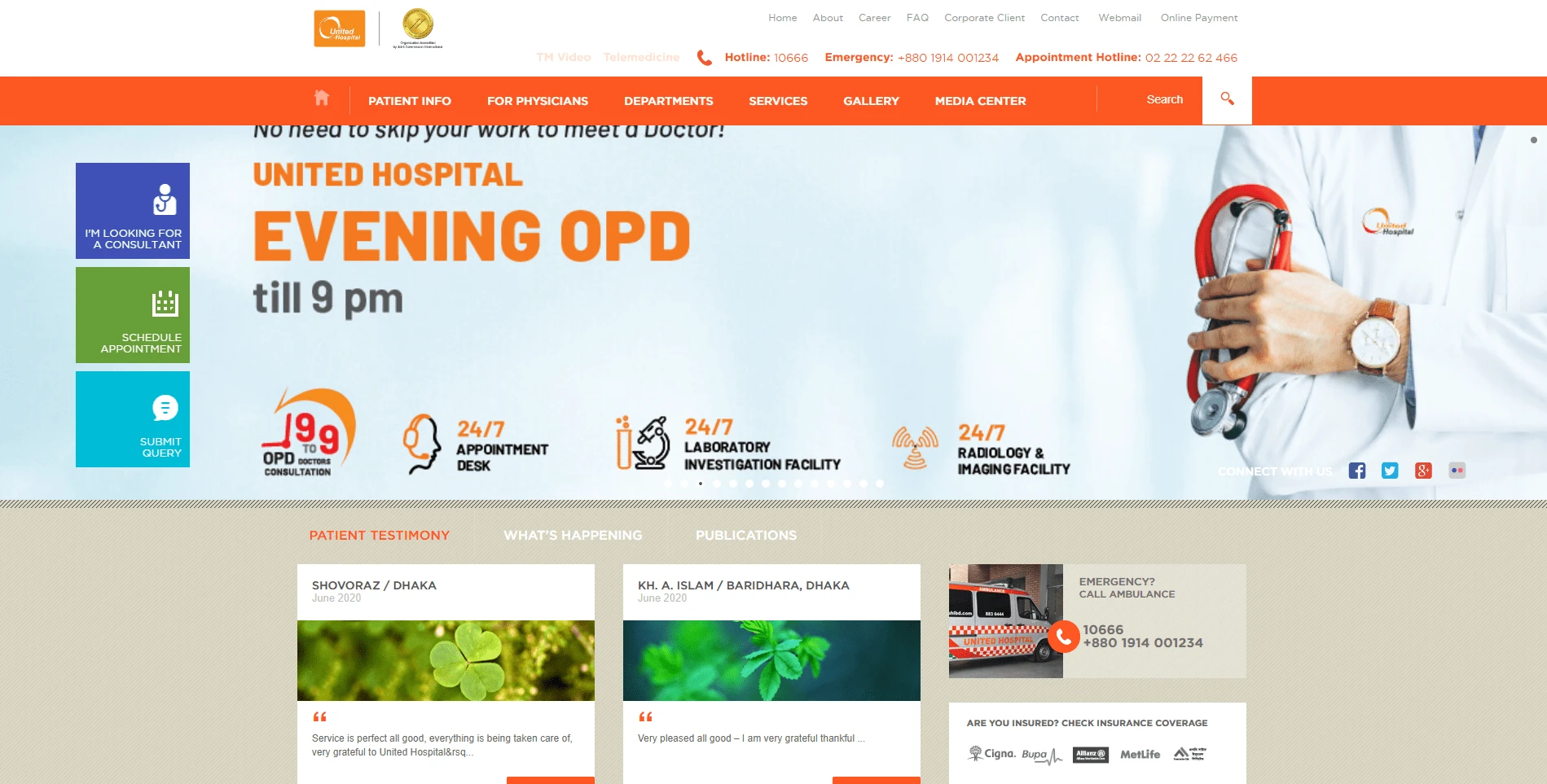
A major private hospital's management system — scheduling first, then ops — 40% efficiency gain and 60% faster appointments.
At a glance
The numbers
40%
operational efficiency gain
60%
faster appointment scheduling
90%
patient satisfaction with digital services
The story
What happened, why, and what moved
Context
I led a hospital management system from first workflow through clinical-scale rollout — digitizing patient, scheduling, and operations workflows for a major private hospital. Healthcare products fail when they ignore clinical load; I scoped the product to survive real hospital pressure. My role covered prioritization, change management criteria, and the metrics that proved we weren't just digitizing paper — we were removing friction patients and staff felt every day.
The trap
Manual processes dominated: patient data scattered across systems, appointment scheduling that required phone calls and paper, resource allocation by spreadsheet. Delays in patient care, administrative overhead, and an inability to scale operations were treated as normal. Every department wanted their module first. Compliance, training, and phased deployment competed with urgency. The trap was building a monolith roadmap instead of winning one workflow completely.
The bet
I bet on scheduling as the first workflow to digitize — the pain point staff felt every day and leadership could measure immediately. Centralized patient management, EHR, and resource dashboards followed once scheduling proved the system could be trusted under clinical load. Quick wins built trust for broader rollout. Without scheduling success, no one would believe the EHR timeline.
The fight
Staff training wasn't an afterthought — it was part of the product launch criteria. No phase went live without readiness on the floor. I sat in on handoff meetings where nurses explained what almost made them revert to paper. We sequenced modules ruthlessly. Dashboards for executives waited; appointment booking for patients and coordinators shipped first.
The proof
Operational efficiency improved 40%. Appointment scheduling time dropped 60%. Patient satisfaction with digital services hit 90%. Administrative overhead fell 50%. Resource utilization rose 30%. Gains held under real clinical load — not pilot-only metrics on a quiet ward.
What I'd do again
I'd still pick the workflow that hurts daily — not the one that looks best in a board deck. Scheduling was unglamorous and undeniable. I'd also budget twice the time you think you need for training. Adoption in hospitals is a product problem, not an ops afterthought.
Product calls
Key decisions
Scheduling as the wedge workflow
Prioritized the workflow staff felt daily over modules that demoed well to executives.
Training as launch criteria
No phase went live without staff readiness — adoption is part of the definition of done.
Clinical load as the test environment
Pilot metrics had to survive peak patient volume, not quiet-week demos.
Outcomes
Measured impact
40% efficiency gain
Digitized workflows under real clinical load
60% faster scheduling
Digital appointments replaced manual phone coordination
90% patient satisfaction
With digital scheduling and patient portal services
50% less admin overhead
Staff time redirected from manual coordination
Takeaways
What I learned
- 1In healthcare, the first workflow you digitize sets trust for everything else.
- 2Clinical load is the ultimate stress test — pilot metrics that don't survive it aren't wins.
- 3If nurses keep a paper backup, you haven't finished the product.
Technical appendix▼
Architecture
Technologies
Related topics
Browse all 16 case studies across AI, commerce, and operations.