Case study · AI · Customer automation
Navbot: automating the inquiries that never should have been manual
AI chatbot for social-media queries and appointment scheduling — 85% inquiry automation and 75% faster response.
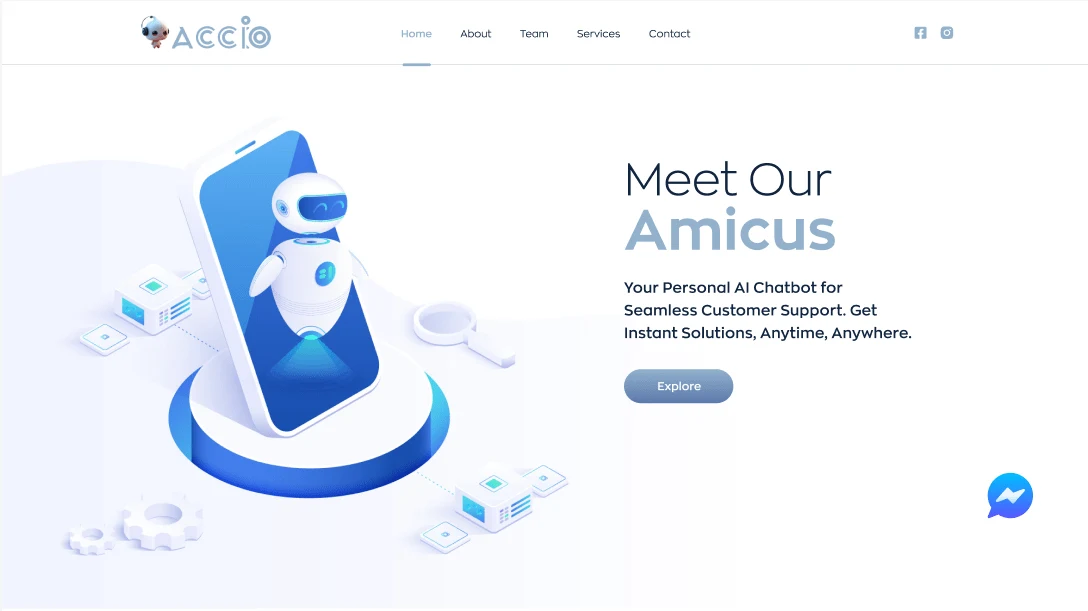
At a glance
The numbers
85%
inquiry automation
75%
faster response time
40%
satisfaction lift
The story
What happened, why, and what moved
Context
I led Navbot from channel strategy through automation metrics — an AI chatbot for social-media customer queries and appointment scheduling across restaurant and automotive use cases. The product had to meet customers where they already were, not force them into another portal. My mandate was volume and satisfaction: automate the repetitive 80% without destroying the 20% that needed a human. Speed without quality is just faster failure.
The trap
Businesses drowned in social-media inquiries and appointment requests. Staff treated the inbox as a second job — delayed responses, missed appointments, frustrated customers at scale. Traditional CRM systems required manual intervention for every message. The trap was building a "smart portal" customers wouldn't open while DMs piled up unanswered.
The bet
I scoped Navbot as one conversational flow: inquiry → resolution or appointment booking, on the channels customers already used. The wedge wasn't "AI chatbot" — it was eliminating repetitive messages so staff could handle high-value service. I prioritized inquiry types with highest volume and lowest ambiguity first — hours, location, appointment slots — before edge cases that demoed well but didn't move volume.
The fight
Teams wanted multi-industry feature parity on day one. I held the line until automation rate proved the flows worked without satisfaction collapse. We A/B tested responses, tuned escalation to humans, and measured satisfaction alongside automation rate. A high automation score with angry customers is a vanity metric — I treated both as launch gates.
The proof
Response time dropped 75%. Routine inquiry automation hit 85%. Customer satisfaction rose 40%. Operational costs fell 50%. Service efficiency improved 30%. Staff redirected time from repetitive messaging to cases that actually needed judgment — the outcome we designed for.
What I'd do again
I'd map the top 20 inquiry types by volume before writing a single dialog tree. Navbot won on boring FAQs, not clever small talk. I'd also ship social-native first, always. Customers don't want another app — they want a reply in the thread they're already in.
Product calls
Key decisions
Social-native, not portal-first
Met customers on social channels instead of forcing a new destination. Adoption follows convenience.
High-volume, low-ambiguity flows first
Automated repetitive inquiries before edge cases that demoed well but didn't move volume.
Satisfaction-gated automation
Raised automation targets only when satisfaction held — never traded quality for a dashboard number.
Outcomes
Measured impact
85% inquiry automation
Routine social queries handled without staff intervention
75% faster response
Instant replies replaced manual inbox triage
40% satisfaction lift
Customers got answers when they asked, not hours later
50% lower ops cost
Staff redirected from repetitive messaging to high-value service
Takeaways
What I learned
- 1Automation rate without satisfaction tracking is a vanity metric.
- 2Meet users on their channel — not yours.
- 3The best chatbot is the one that knows when to shut up and hand off.
Technical appendix▼
Architecture
Technologies
Related topics
Browse all 16 case studies across AI, commerce, and operations.