Case study · B2B SaaS · Inventory & analytics
AssetIQ: making inventory tell the truth — and unlocking 264% growth
RFID + AI turned a guessing game into real-time truth, ended stockouts, and nearly quadrupled revenue.
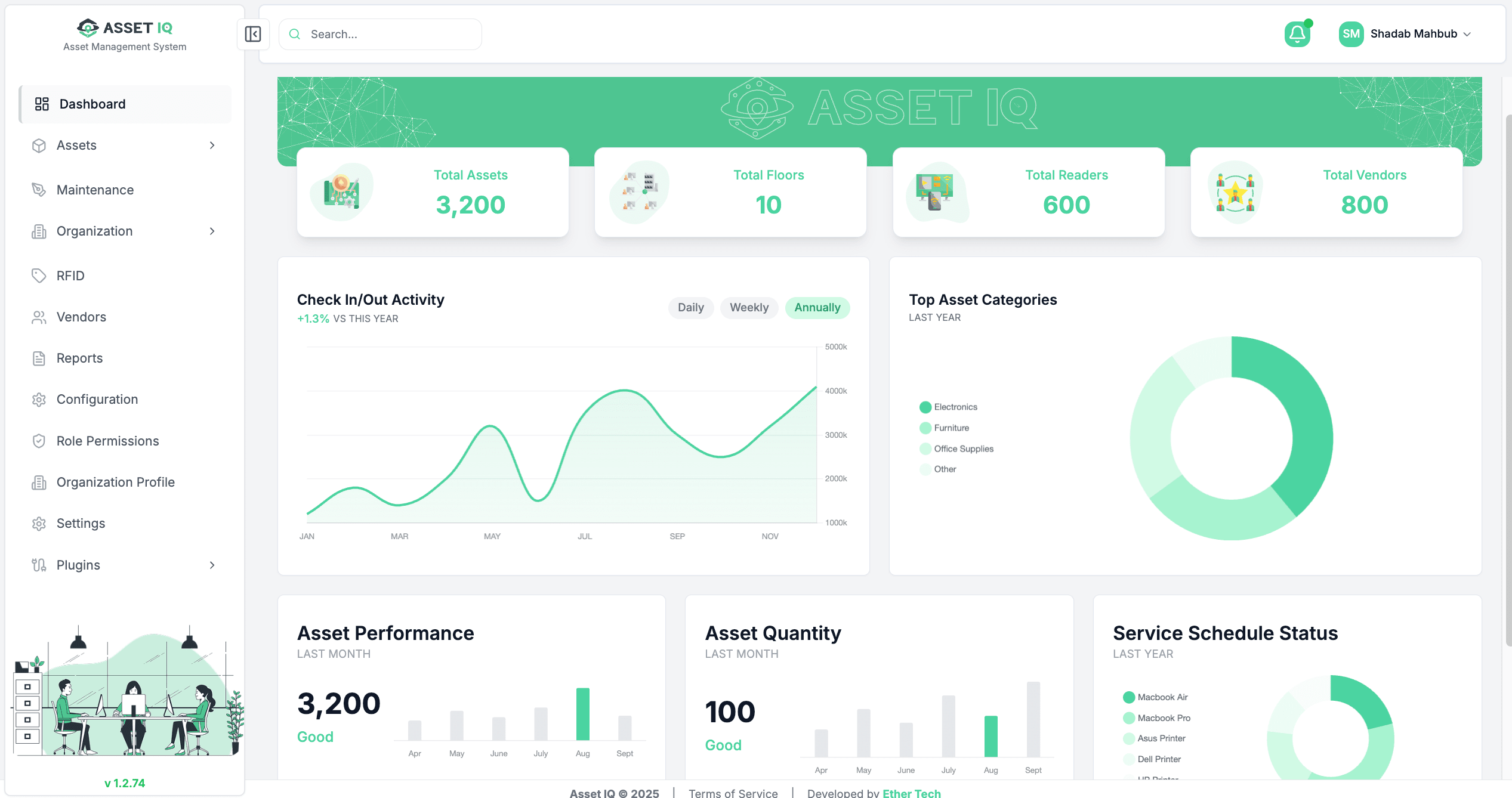
At a glance
The numbers
264%
revenue growth
99.4%
inventory accuracy
3 hrs
stock count vs. two days
The story
What happened, why, and what moved
Context
I led AssetIQ from problem framing through revenue impact — RFID-driven real-time inventory with an AI analytics layer, built to plug into the tools leadership already lived in: Snowflake and Power BI. The goal wasn't a better stock count. It was to stop stockouts from quietly killing sales — and to make inventory data as trusted as cash on the balance sheet. I owned the wedge, the rollout sequence, and the metrics investors and operators both had to believe.
The trap
The warehouse was guessing. Stock counts took two days and were wrong by the time they finished. Leadership decided on stale data; "how much do we actually have?" had no fast, trustworthy answer. Accuracy sat around 85%. The hidden cost wasn't overstock sitting in the back — it was empty shelves and sales walking out the door. Finance saw inventory as a line item; sales felt stockouts in commissions. Nobody had one version of the truth.
The bet
The bet: don't just track stock, make the data instantly usable where decisions happen. I scoped AssetIQ to win on trust first — one reconciliation that beat the manual count and was provably right — then expand into analytics and BI integration. RFID was necessary but not sufficient. The product won when a warehouse manager and a CFO could argue from the same number — in the same dashboard they already opened every morning.
The fight
The hard part was trust after years of "the system is always wrong." Teams wanted dashboards before accuracy; I held the line. We shipped reconciliation workflows, audit trails, and side-by-side manual vs. system counts until skepticism ran out of excuses. The turning point was mundane and decisive: AssetIQ's count beat manual on a spot check — and was proven right when goods shipped. After that, adoption spread without a mandate.
The proof
Accuracy climbed from ~85% to 99.4%. A two-day stock count collapsed to about three hours. Cycle counts became something you scheduled, not something you dreaded. Then the real prize: with accurate, real-time inventory, stockouts stopped killing sales — and revenue grew 264%. Leadership stopped asking "can we trust this?" and started asking "what else can we connect?"
What I'd do again
I'd still refuse to build a standalone executive dashboard. The moment inventory appeared in Power BI next to revenue and margin, AssetIQ became infrastructure — not another tool to ignore. I'd also name the trust milestone in the roadmap doc: "first audit win by Q2." Without that, teams optimize for features that demo well and skip the work that changes behavior.
Product calls
Key decisions
BI integration over standalone dashboards
I pushed AssetIQ data into Snowflake and Power BI instead of building yet another reporting UI. Inventory had to sit beside the numbers leadership already acted on.
Trust before analytics
We shipped reconciliation accuracy before forecasting or AI recommendations. Without trust in the count, no dashboard changes behavior.
Revenue as the north star
I tied roadmap priorities to stockout reduction and sell-through, not RFID tag reads. Tags are infrastructure; recovered sales are the product.
Outcomes
Measured impact
264% revenue growth
Stockouts stopped killing sales once inventory was trustworthy in real time
99.4% inventory accuracy
Up from ~85% after RFID + reconciliation workflows landed
3-hour stock counts
Down from two-day manual cycles that were stale on arrival
Snowflake + Power BI integration
Data surfaced where leadership already made decisions
Takeaways
What I learned
- 1RFID was table stakes; trust in the data layer was the product.
- 2With operational data products, the first reconciliation that wins an argument is worth more than a hundred charts.
- 3If the metric doesn't connect to revenue or cost, it's a science project — not a product.
Technical appendix▼
Architecture
Technologies
Related topics
Browse all 16 case studies across AI, commerce, and operations.